 Written by
 How to avoid social security mistakes everyone needs to know. Planning for retirement can be overwhelming for many of us, but with my step-by-step guide you will be more confident and prepared.
Affiliate Disclosure
Amazon + Friends
Affiliate Disclosure: Some of the links on this website may be affiliate links. This means that if you click a link and make a purchase, I may earn a small commission at no extra cost to you. These commissions help support 65 Plus Life and Boomer Biz HQ, and Dawg Solutions. so I can continue creating free resources for older adults.
Amazon Disclosure: As an Amazon Associate, I earn from qualifying purchases. Any Amazon links used throughout this website may earn a commission when you purchase through them.
Wealthy Affiliate Disclosure: I am also a proud affiliate of Wealthy Affiliate. If you choose to join their platform through my referral link, I may earn a commission. I only recommend Wealthy Affiliate because it has personally helped me build websites and create income online, and I believe it can help other older adults learn these skills too.

Thank you for supporting my work — it truly means a lot.
Jeff
How to Avoid Social Security Mistakes
What I Learned the Hard Way
When I first started digging into Social Security, I assumed it would be simple.
I was wrong.
Like many retirees and pre-retirees, I discovered that Social Security is full of rules, timing decisions, and small details that can make a big difference in your lifetime income. Over time, I realized that many people — including me at first — make avoidable mistakes that can cost thousands of dollars.
The good news? Most of these mistakes are completely preventable once you know what to watch for.
Let me start with the most common Social Security mistakes I’ve seen and a few I nearly made myself.
The Most Common Social Security Mistakes
1. Claiming Benefits Too Early
One of the biggest mistakes people make is filing for Social Security at age 62 simply because they can.
Yes, 62 is the earliest eligibility age — but claiming early permanently reduces your monthly benefit. For many retirees, waiting even a few years can significantly increase lifetime income.
Jeffs Tips
Treating age 62 as the “default” claiming age.
Timing your claim is one of the most important retirement decisions you’ll make.
2. Not Understanding Full Retirement Age
Many people don’t realize that “full retirement age” is not the same for everyone.
Depending on your birth year, your FRA is likely between 66 and 67. Claiming before FRA reduces your benefit, while delaying past FRA increases it through delayed retirement credits.
Jeffs Tips
Assuming Social Security works the same for everyone.
Your birth year directly affects your benefit calculations.
3. Ignoring the Impact of Working While Claiming
This one surprises a lot of people.
If you claim Social Security before full retirement age and continue working, your benefits may be temporarily reduced if your earnings exceed the annual limit.
Jeffs Tips
Filing early while still working full-time without understanding the earnings test.
Your income can affect your short-term benefit payments.
4. Failing to Coordinate Spousal Benefits
Married couples have more claiming strategies available — but many never use them.
Poor coordination can leave significant money on the table over the course of retirement.
Jeffs Tips
Each spouse claims independently without a coordinated plan.
Smart spousal timing can increase total household benefits.
5. Not Checking Your Earnings Record
Your Social Security benefit is based on your highest 35 years of earnings.
Errors in your earnings history are more common than many people think — and if they go uncorrected, your benefit could be lower than it should be.
Jeffs Tips
Assuming the Social Security Administration’s records are automatically correct.
Reviewing your record is quick and can prevent costly errors.
6. Overlooking Taxes on Social Security
Retirement Taxes
Many retirees are surprised to learn that Social Security benefits can be taxable depending on total income.
Without planning, taxes can quietly reduce your net retirement income.
Jeffs Tips
Assuming Social Security is always tax-free.
Up to 85% of benefits may be taxable for some retirees.
What I Learned the Hard Way About Social Security
When I first started looking seriously at Social Security, I thought it would be pretty straightforward.
After all, you work, you pay in, and then you collect — right?
That’s what I assumed.
But once I dug deeper, I realized Social Security is full of timing decisions, little-known rules, and fine print that can dramatically affect your retirement income. I’ll be honest — there were a few points where I almost made decisions that could have permanently reduced my benefits.
That got my attention fast.
What I discovered is that many retirees make the same costly mistakes simply because no one ever clearly explained the system to them. The good news is that most of these mistakes are completely avoidable once you know what to watch for.
Let’s walk through the most common Social Security mistakes — and more importantly, how you can avoid them.
1. Claiming Benefits Too Early
It’s very tempting to file for Social Security at age 62. After all, that’s the first year you’re eligible.
I seriously considered it myself at one point.
But here’s what many people don’t realize: claiming early permanently reduces your monthly benefit. Depending on your full retirement age, filing at 62 can reduce your benefit by as much as 25–30%.
That reduction lasts for life.
How to avoid this mistake
Before claiming early:
- Compare your benefit at 62 vs. full retirement age vs. age 70
- Consider your health and family longevity
- Look at whether you truly need the income right now
- Run the numbers on lifetime benefits, not just monthly payments
For many people, waiting even a few years can mean tens of thousands more over retirement.
2. Not Understanding Your Full Retirement Age (FRA)
One thing that surprised me early on was that full retirement age is not the same for everyone.
Many folks still think FRA is 65 — but for most people today, it’s between 66 and 67 depending on birth year.
Your FRA matters because:
- Claiming before FRA reduces benefits
- Claiming after FRA increases benefits (up to age 70)
How to avoid this mistake
Make sure you know your exact FRA based on your birth year.
Then:
- Use your FRA as your baseline comparison point
- Understand how much your benefit changes each year you delay
- Build your retirement income plan around that number
This one simple step can prevent a lot of confusion later.
3. Ignoring the Impact of Working While Claiming
This is a big “gotcha” that catches many people off guard.
If you claim Social Security before full retirement age and continue working, your benefits may be temporarily reduced if your earnings exceed the annual limit.
I’ve seen many retirees surprised by this.
Important note
The money isn’t lost forever — but the temporary reduction can still disrupt your income planning.
How to avoid this mistake
If you plan to work while collecting:
- Know the annual earnings limit
- Estimate your expected work income
- Consider delaying benefits until FRA if you plan to earn significantly
- Understand the reduction is temporary but affects short-term cash flow
A little planning here can prevent an unpleasant surprise.
4. Failing to Coordinate Spousal Benefits
For married couples, Social Security planning gets more powerful — and more complicated.
Many couples simply file individually without looking at the bigger household picture. That can leave serious money on the table over time.
I’ve learned that Social Security is not just an individual decision for married couples — it’s a strategy decision.
How to avoid this mistake
Married couples should:
- Look at both spouses’ benefit amounts
- Consider the higher earner delaying longer
- Evaluate survivor benefit implications
- Run a household claiming strategy, not two separate ones
Smart coordination can significantly boost lifetime household income.
5. Not Checking Your Earnings Record
This is one of the easiest mistakes to fix — but many people never do it.
Your Social Security benefit is calculated using your highest 35 years of earnings. If there’s an error in your record, your benefit could be lower than it should be.
And yes — errors do happen.
How to avoid this mistake
Create and review your my Social Security account and:
- Check that your earnings history is complete
- Look for missing years
- Verify large income years are correct
- Correct any errors as early as possible
This takes just a few minutes and can protect your future benefit.
6. Overlooking Taxes on Social Security
This one surprises a lot of retirees.
Depending on your total income in retirement, up to 85% of your Social Security benefits may be taxable at the federal level.
Many people don’t discover this until after they’ve already filed.
How to avoid this mistake
Before claiming benefits:
- Estimate your total retirement income
- Understand the Social Security tax thresholds
- Consider withdrawal strategies from IRAs and 401(k)s
- Talk with a tax professional if your income will be close to the limits
Good tax planning can help you keep more of what you receive.
Understanding Social Security
Social Security
Social Security is one of the most important pieces of your retirement income — but it’s also one of the most misunderstood.
The good news is that with a little planning and the right information, most of the costly mistakes people make can be avoided.
And that can mean a more confident — and more comfortable — retirement.
How Social Security Works If You Become Disabled Before Age 50
Most people think of Social Security as something you collect in your 60s.
But what many don’t realize — and what really surprised me when I first learned it — is that Social Security also provides protection if you become disabled long before retirement age.
If a serious illness or injury prevents you from working, you may qualify for Social Security Disability Insurance (SSDI) — even if you’re under age 50.
Understanding how this works can make a huge difference if life throws you an unexpected curveball.
What Is Social Security Disability Insurance (SSDI)?
SSDI is a federal program that pays monthly benefits to people who can no longer work due to a qualifying disability.
Think of it as insurance you’ve been paying for through your payroll taxes all along.
To qualify, you generally must:
- Have worked and paid Social Security taxes
- Have earned enough work credits
- Have a medical condition that meets Social Security’s definition of disability
- Be unable to perform substantial work
How Work Credits Work for People Under 50
One thing that confuses many people is the work credit requirement.
The number of credits you need depends on your age when you become disabled.
General rule of thumb:
- You can earn up to 4 credits per year
- Most workers need 20 credits earned in the last 10 years
- Younger workers may qualify with fewer credits
For workers under age 50:
Social Security uses a sliding scale. For example:
- Disabled before age 24 → may qualify with as few as 6 credits
- Disabled age 24–30 → credits based on years worked since age 21
- Disabled age 31–49 → typically need about 20 credits in the last 10 years
You do not need a full 35-year career to qualify for disability benefits.
What Counts as a Disability?
This is where many applications get denied.
Social Security has a strict definition of disability. It’s not enough to have a medical condition — the condition must:
- Prevent you from doing your previous work
- Prevent you from adjusting to other work
- Be expected to last at least 12 months
Short-term or partial disabilities usually do not qualify.
Common qualifying conditions include:
- Severe back injuries
- Advanced heart disease
- Certain cancers
- Serious neurological disorders
- Advanced autoimmune diseases
How Much SSDI Pays
Your SSDI benefit is based on your lifetime earnings — not on the severity of your disability.
In general:
- Higher lifetime earnings → higher disability benefit
- Payments are similar to what your full retirement benefit would be at FRA
- Benefits may convert to retirement benefits at full retirement age
Many people are surprised to learn that disability benefits are often larger than early retirement benefits at 62.
The 5-Month Waiting Period
One important detail that catches people off guard is the waiting period.
After Social Security determines you are disabled:
- There is a 5-month waiting period before payments begin
- Benefits are not paid for those first five months
- Back pay may apply depending on when you apply
This is why applying as soon as you become unable to work is so important.
Medicare Eligibility Under Age 50
Another little-known benefit:
If you receive SSDI, you can qualify for Medicare coverage, even if you’re under 65.
However:
- Medicare typically begins 24 months after SSDI payments start
- Some conditions (like ALS) may qualify sooner
This can be a major financial lifeline for younger disabled workers.
How to Avoid Common SSDI Mistakes
From what I’ve seen, people run into trouble with disability claims for a few predictable reasons.
You can protect yourself by:
- Applying as soon as you realize you cannot work
- Keeping thorough medical documentation
- Following your doctor’s treatment plan
- Not assuming you automatically qualify
- Considering professional help if your claim is denied
Many initial SSDI applications are denied — but many are later approved on appeal.
Social Security Disability
Social Security isn’t just a retirement program — it’s also a critical safety net if disability strikes early in life.
If you become unable to work before age 50, SSDI may provide:
- Monthly income
- Future retirement protection
- Access to Medicare coverage
Knowing how the system works ahead of time can help you and your family make faster, smarter decisions if the unexpected happens.
What You Need To Know About Social Security
Medicare
Before you make any claiming decisions, it helps to understand the basics of how Social Security actually works.
When I first started researching this, I realized many people — including me at the time — were making decisions without fully understanding the system. Once you know the fundamentals, everything else starts to make much more sense.
Here are the key things every future retiree should know.
Social Security Is Based on Your Work History
Social Security retirement benefits are primarily based on your highest 35 years of earnings.
Here’s what that means in plain English:
- Your earnings are adjusted for inflation
- The Social Security Administration averages your top 35 years
- If you have fewer than 35 working years, zeros are included
- Higher lifetime earnings generally mean higher benefits
Even a few additional working years can sometimes boost your benefit.
You Earn Benefits by Paying Into the System
Social Security is funded through payroll taxes (FICA).
If you’ve worked and paid into the system long enough, you earn eligibility for retirement benefits.
In general, most people need:
- 40 work credits (about 10 years of work)
- Credits are earned through covered employment
- Self-employed workers also pay into the system
Think of it as a benefit you’ve been contributing toward throughout your working life.
Your Claiming Age Matters — A Lot
One of the biggest levers you control is when you claim.
Here’s the basic framework:
- Age 62 → earliest claiming age (reduced benefit)
- Full Retirement Age (66–67 for most people) → full benefit
- Age 70 → maximum delayed benefit
Rough rule of thumb:
- Claim early → smaller monthly checks
- Delay longer → larger monthly checks
Important
The right age depends on your health, income needs, and overall retirement plan.
Social Security Was Never Meant To Be Your Only Income
This is something I always emphasize to readers.
Social Security was designed to replace only part of your pre-retirement income — not all of it.
For most retirees, it typically replaces about:
- 30% to 40% of pre-retirement earnings (rough estimate)
That’s why personal savings, pensions, and investments still play a critical role in retirement planning.
Your Benefit Can Increase If You Delay
One of the most powerful (and often overlooked) features is delayed retirement credits.
If you wait past your full retirement age:
- Your benefit increases about 8% per year
- This continues until age 70
- The increase is permanent
For healthy retirees with longevity in the family, this can be a very valuable strategy.
Social Security Rules Do Change
Another lesson I learned early on: you can’t just “set it and forget it.”
While the core program has been stable for decades, things like:
- Earnings limits
- Tax thresholds
- Full retirement age rules
- Cost-of-living adjustments (COLA)
…can and do change over time.
Jeff Recommends
Review your Social Security plan every few years, especially as you approach retirement.
Social Security Strategy
Retirement Income
Social Security may seem complicated at first, but the basic building blocks are actually pretty straightforward once you understand them.
The key is this: the decisions you make about when and how you claim can have a lasting impact on your retirement income.
That’s why a little education now can pay off for decades.
Want to Learn More About Maximizing Your Benefits?
Social Security is just one piece of the retirement puzzle.
As I’ve learned over the years, the real confidence in retirement comes from understanding how Social Security, Medicare, and taxes all work together. When these pieces are coordinated properly, you can avoid costly surprises and keep more of your hard-earned money.
If you want to go deeper, I highly recommend exploring these helpful guides on Boomer Biz HQ:
- Social Security — claiming strategies, benefit timing, and common mistakes to avoid
- Medicare — enrollment timing, coverage options, and penalty traps
- Retirement Taxes — how taxes can affect your Social Security and retirement income
Taking a little time now to educate yourself can pay off for the rest of your retirement.
Be sure to visit these sections to continue building your retirement game plan.
Prepare Now to Get the Most From Social Security
Free Retirement Blueprint
If there’s one thing I’ve learned, it’s this: the people who get the most out of Social Security are the ones who plan ahead.
Social Security isn’t just something that automatically works in your favor. The timing decisions you make, the mistakes you avoid, and how well you coordinate your overall retirement plan can have a lasting impact on how much income you receive over your lifetime.
The good news is you don’t have to guess your way through it.
By understanding how the system works, checking your earnings record, thinking carefully about when to claim, and planning for taxes and Medicare, you put yourself in a much stronger position than the average retiree.
A few smart moves today can mean:
- Bigger monthly checks
- More lifetime income
- Fewer surprises in retirement
- Greater peace of mind for you and your family
Take the time now to review your plan, run your numbers, and educate yourself. Your future retired self will be glad you did.
And remember — the goal isn’t just to collect Social Security.
It’s to collect the most Social Security income you’ve earned and deserve during your retirement years.
Thank you for taking the time to read ” How to Avoid Social Security Mistakes”,
Jeff
Bonus Review
Social Security In A Nutshell
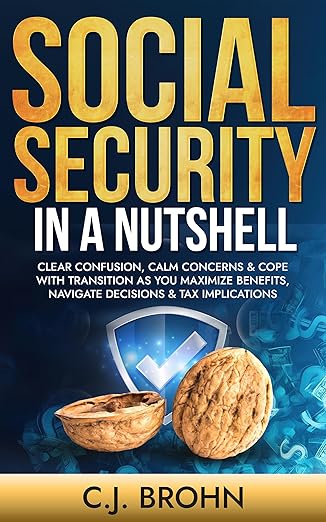
If you’re feeling even a little overwhelmed by Social Security (and let’s be honest — most of us are at first), Social Security In A Nutshell: Clear Confusion, Calm Concerns & Cope with Transition As You Maximize Benefits, Navigate Decisions & Tax Implications is a helpful resource worth a look.
What stands out right away is the book’s plain-English approach. Instead of burying you in technical jargon, the author focuses on breaking down complex Social Security topics into digestible explanations. For readers who are just starting their retirement planning journey, that alone can be a big relief.
What Readers Will Appreciate
The book does a nice job of:
- Explaining how Social Security benefits are calculated
- Walking through common claiming decisions
- Highlighting tax implications many retirees overlook
- Addressing emotional concerns around the retirement transition
- Providing a broad overview without being overly academic
I especially like that it acknowledges something many guides ignore — the emotional side of moving into retirement. For many folks, this isn’t just a financial shift; it’s a life transition.
Who This Book Is Best For
In my opinion, this guide is best suited for:
- Pre-retirees who are new to Social Security planning
- Readers who want a high-level overview before diving deeper
- Anyone feeling confused by the basic rules and options
- Folks who prefer conversational, easy-to-read financial books
If you’re already deep into advanced claiming strategies, you may find it more introductory than technical — but for many readers, that’s actually a strength.
A Friendly Heads-Up
Like most “nutshell” style guides, this book is meant to educate and simplify — not replace personalized financial or tax advice. Social Security decisions can vary widely based on your individual situation, so it’s always smart to pair what you learn with your own planning.
Kindle Edition
Social Security In A Nutshell is a solid, approachable primer that helps remove much of the mystery around how Social Security works. If you want a calm, readable starting point to build your understanding, it’s a worthwhile addition to your retirement planning toolkit.
Already Have Kindle Unlimited?
You may be able to read Social Security In A Nutshell for free with your membership.
Audiobook, Hardcover, and Paperback optional if you prefer one of these formats instead.
Jeffs Quick Note About the Kindle Unlimited Ebooks Shared
You may notice that we occasionally recommend helpful ebooks within our articles.
Many of these titles are available free to read for Kindle Unlimited members as part of their subscription. When readers choose to read these included ebooks through Kindle Unlimited, I do not earn any commissions from that activity.
We share these resources because I believe they can be genuinely helpful
Kindle Unlimited 30-Day Free Trial to see if this is something you would like to join or pass up, being an avid reader I have read more ebooks during my free trial to easily make this a no-brainer for me. If you are an avid reaers this pays for itself right away, but if not you more likely will want to pass this up.
As a little bonus for our Kindle Unlimited readers, this book may be available to read at no extra cost with your membership. If you prefer another format, you can still access the book — it will just usually come with a purchase price.
Thank you for taking the time to visit “Boomer Biz HQ”,
Jeff
Amazon Disclosure: As an Amazon Associate, I earn from qualifying purchases. Any Amazon links used throughout this website may earn a commission when you purchase through them.
- Learning How To Communicate With Chat GPT For SeniorsLearning how to communicate with chat gpt for seniors provides you with many benefits. If you are interested in learning from my experience with artificial intelligence, you will not want to miss reading this article written especially to help older adults. Affiliate Disclosure: Some of the links on this website may be affiliate links. This … Continue reading “Learning How To Communicate With Chat GPT For Seniors”
- Learn How Retirees Can Benefit From Chatgpt Stress FreeLearn how retirees can benefit from ChatGPT stress-free. Retirement brings extra time and freedom, though it can also present a handful of challenges, such as keeping your mind active, staying organized, or tracking down new hobbies. That’s where ChatGPT steps in. It’s a digital assistant you can use for free, and honestly, it comes in … Continue reading “Learn How Retirees Can Benefit From Chatgpt Stress Free”
- How To Improve Writing Skills Using Technology ResourcesHow to improve writing skills using technology resources. Many new writers lack the knowledge of the technology resources on the internet to use, so that is what I am going to provide you in the article that you are about to read. Affiliate Disclosure Amazon + Friends Affiliate Disclosure: Some of the links on this … Continue reading “How To Improve Writing Skills Using Technology Resources”
- How To Automate Facebook Group Content Posting With AIHow to automate FaceBook group content posting with AI is what you will learn from me. Many of you are more likely uising Facebook to promote your writing, no matter if you are writing blog articles or writing an ebook this something you will want to learn. Affiliate Disclosure Amazon + Friends Affiliate Disclosure: Some … Continue reading “How To Automate Facebook Group Content Posting With AI”
- 10 Best Kindle Unlimited Ebooks For Aspiring Authors10 best Kindle Unlimited eBooks for aspiring authors is a good resource for aspiring authors. By me doing the work for you, this saves you time from reading ebooks that are not the best resources for you. Affiliate Disclosure Amazon + Friends Affiliate Disclosure: Some of the links on this website may be affiliate links. … Continue reading “10 Best Kindle Unlimited Ebooks For Aspiring Authors”
- Where Can I Find Paid Writing Gigs In 2026 OnlineWhere can I find paid writing gigs in 2026 onliine to supplement your income. Many new writers lack the knowledge of where to find writing gigs, and how to find them on their own. In this article, you will learn where you can find opportunities that you might not be aware of. Affiliate Disclosure Amazon … Continue reading “Where Can I Find Paid Writing Gigs In 2026 Online”
- What Are The Top Ebooks For Writers In 2026 To ReadWhat are the top eBooks for writers in 2026 to read are good resources to know about. Many writers don’t take advantage of the eBooks that can provide them with a ton of valuable information, you will find the best eBooks for writers are writen by successful writers. Affiliate Disclosure Amazon + Friends Affiliate Disclosure: … Continue reading “What Are The Top Ebooks For Writers In 2026 To Read”
- How To Write A Special Ebook Step By Step GuideHow to write a special eBook step by step guide will amaze you how easy this really is, helping you accomplish this and your other writing goals is the mission of Boomer Biz HQ. Be sure to check all my step-by-step guides waiting to help you, now are you ready to write that special eBook. … Continue reading “How To Write A Special Ebook Step By Step Guide”
- 12 Top Writing Resources For New Writers Success In 202612 top writing resources for new writers success in 2026. With artificial intelligence 2026 has more to offer new writers success than ever before, interested in the 12 top writing resources for new writers, that is what I have to share with you in this article. Affiliate Disclosure Amazon + Friends Affiliate Disclosure: Some of … Continue reading “12 Top Writing Resources For New Writers Success In 2026”
- 10 Best Writing Productivity Tips For 202610 best writing productivity tips for 2026. Anyone at any age can be a productive writer, many seniors after they retire supplement their income by writing online. With my 10 best writing productivity tips you also can become a writer, why not take the first step right now. Affiliate Disclosure Amazon + Friends Affiliate Disclosure: … Continue reading “10 Best Writing Productivity Tips For 2026”


























Hello,
This article was such a thoughtful and helpful read, thank you for breaking down Social Security in a way that feels practical and not intimidating. I know so many people (including myself) can get overwhelmed thinking about all the rules and deadlines, and your tips make it feel way more manageable to make smart decisions instead of guessing and hoping for the best.
I especially appreciated how you highlighted the mistakes people often don’t even realize they’re making until it’s too late. That’s the kind of insight that can literally make a difference in someone’s retirement income and peace of mind. It also reminded me how important it is to be proactive and ask questions rather than assuming everything will just work itself out.
I’d love to know from your experience, are there any mistakes you see most often that people don’t catch until after they’ve already filed? What’s the one thing you wish everyone knew before starting the process?
Angela M 🙂
Thanks for commenting on my article,
jeff